

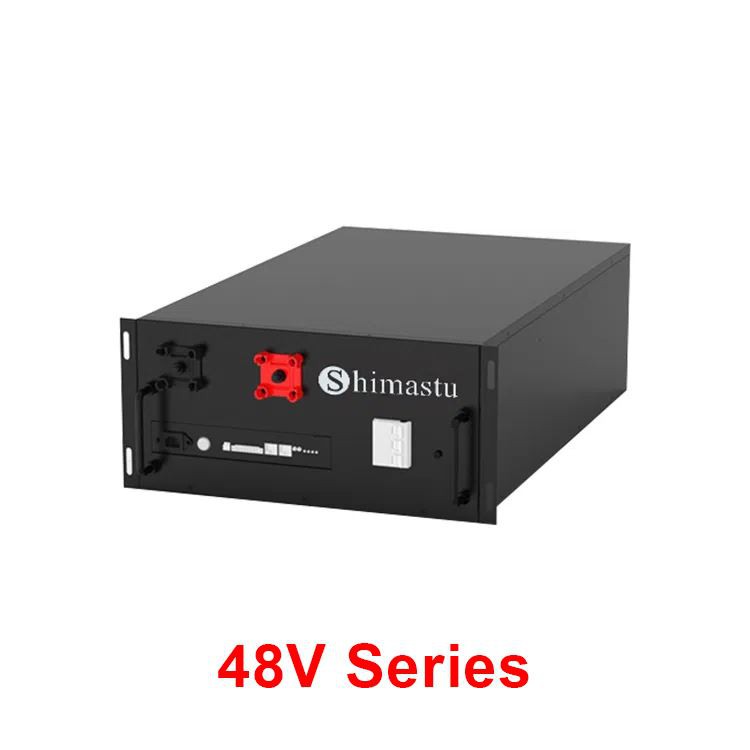
Hey there! As a supplier of the 48V Series, I've been getting a lot of questions about how to test the performance of these batteries. So, I thought I'd put together this blog post to share some insights and tips.
Why Testing the 48V Series is Crucial
First off, let's talk about why testing the performance of the 48V Series is so important. Whether you're using these batteries for electric vehicles, solar energy storage, or other applications, you need to make sure they're up to the task. Testing helps you identify any potential issues early on, ensuring that your batteries perform optimally and have a long lifespan.
Key Performance Metrics
Before we dive into the testing methods, let's go over some of the key performance metrics you'll want to pay attention to:
- Capacity: This is the amount of charge a battery can store. It's usually measured in ampere - hours (Ah). A higher capacity means the battery can power your device for a longer time.
- Voltage: The voltage of a battery indicates the electrical potential difference. For the 48V Series, you'd expect the voltage to be around 48 volts, but it can vary depending on the state of charge.
- Internal Resistance: A lower internal resistance means less energy is lost as heat during charging and discharging, resulting in higher efficiency.
- Cycle Life: This refers to the number of charge - discharge cycles a battery can undergo before its capacity drops to a certain level. A longer cycle life is generally better.
Testing Methods
1. Capacity Testing
Capacity testing is one of the most basic but important tests. To perform a capacity test, you'll need a battery charger and a load.
- First, fully charge the 48V battery. Make sure it's charged to its maximum voltage according to the manufacturer's specifications.
- Then, connect a load to the battery. The load should be rated to draw a constant current. For example, if you want to test at a 1C rate (where C is the battery's capacity in Ah), and your battery has a capacity of 100Ah, the load should draw 100A.
- Monitor the battery voltage as it discharges. When the voltage drops to the cut - off voltage (usually specified by the manufacturer), stop the discharge.
- Calculate the capacity by multiplying the discharge current by the discharge time. For instance, if the battery discharges at 50A for 2 hours, the capacity is 50A x 2h = 100Ah.
2. Voltage Testing
Voltage testing is straightforward. You can use a multimeter to measure the battery voltage at different states of charge.
- When the battery is fully charged, the voltage should be close to the upper voltage limit. As the battery discharges, the voltage will gradually decrease.
- It's a good idea to measure the voltage at regular intervals during charging and discharging to get a better understanding of the battery's behavior. For example, you can measure the voltage every 10 minutes during a discharge test.
3. Internal Resistance Testing
There are a few ways to measure internal resistance. One common method is the DC current interruption method.
- First, measure the open - circuit voltage (OCV) of the battery. This is the voltage when the battery is not connected to any load.
- Then, apply a short - duration, high - current pulse to the battery. Measure the voltage during the pulse.
- The internal resistance (R) can be calculated using the formula: R=(OCV - Vpulse)/Ipulse, where OCV is the open - circuit voltage, Vpulse is the voltage during the pulse, and Ipulse is the current of the pulse.
4. Cycle Life Testing
Cycle life testing is a long - term test. You'll need to repeatedly charge and discharge the battery under specific conditions.
- Set up a charging and discharging cycle. For example, you can charge the battery at a constant current until it reaches a certain voltage, then switch to a constant - voltage charge until the current drops to a specified level.
- For discharging, use a constant - current load until the battery reaches the cut - off voltage.
- Keep track of the number of cycles and the capacity of the battery after each cycle. Plot a graph of capacity versus the number of cycles to see how the battery's performance degrades over time.
Factors Affecting Test Results
It's important to note that several factors can affect the test results:
- Temperature: Batteries perform differently at different temperatures. Higher temperatures generally increase the battery's performance in the short term but can reduce its cycle life over time. Lower temperatures can decrease the battery's capacity and increase its internal resistance.
- Charging and Discharging Rates: Faster charging and discharging rates can cause more stress on the battery, leading to higher internal resistance and reduced capacity.
Real - World Applications
In real - world applications, the performance of the 48V Series batteries can vary. For example, in an electric vehicle, the battery may experience different driving conditions, such as stop - and - go traffic or high - speed highway driving. These conditions can affect the battery's charging and discharging patterns.
In solar energy storage systems, the battery may be charged during the day by solar panels and discharged at night. The amount of sunlight available and the energy consumption at night can impact the battery's performance.
Conclusion
Testing the performance of the 48V Series is essential to ensure that you're getting the most out of your batteries. By understanding the key performance metrics and using the right testing methods, you can identify any issues early and take steps to optimize the battery's performance.
If you're interested in 48V Lithium Battery or want to learn more about our 48V Lithium Battery products, we're here to help. Whether you're a distributor, an end - user, or just curious about battery technology, feel free to reach out to us for more information and to start a procurement discussion. We're always happy to talk about how our 48V Series batteries can meet your specific needs.

References
- Battery Technology Handbook
- Industry standards for lithium - ion battery testing


