




Car Battery
Your Professional Car Battery Manufacturer in China!
Shimastu Electronic Technology Co., Limited, a premier manufacturer of Sealed Lead Acid batteries&Lithium batteries, was established in 2001 and located in Zhongshan City, Guangdong Province, China.
Why Choose Us
Wide Product Range
Our main products cover AGM VRLA batteries, GEL batteries, OPzV/OPzS batteries, font terminal batteries, 2V long-life batteries, lead carbon batteries, lithium batteries, Car batteries, etc.
Quality Guaranteed
Shimastu strictly works on quality control of all production steps, ensuring all the products a reliable performance and high quality, and the company has been certified with ISO 9001, ISO 14001, UL and CE, etc.
Wide Applications
Shimastu has been exporting to worldwide clients serving in the energy storage and power backup industry such as UPS/EPS, solar power systems, security systems, emergency lighting systems, telecom systems, data centers, etc.
High Quality Service
We specialize in research and development, manufacturing, sales, and marketing of full categories of batteries. We are committed to providing a high level of customer service, and 24/7 customer support, so all your problems can be responded to quickly.
-
![Maintenance Free Car Battery]() Maintenance Free Car BatteryRead More
Maintenance Free Car BatteryRead MoreMaintenance free car batteries are batteries that do not require special maintenance during use under specified conditions, such as valve-regulated sealed lead-acid batteries. This kind of battery
-
![EFB Car Battery]() EFB Car BatteryRead More
EFB Car BatteryRead MoreShimastu start-stop series with EFB technology are built for higher performance and reliability than conventional flooded batteries and can support entry-level start-stop functionality.
-
![AGM Car Battery]() AGM Car BatteryRead More
AGM Car BatteryRead MoreShimastu start-stop series with AGM technology have enhanced the durability and battery life to perfectly optimize for the start stop functions together with break energy recuperation.
-
![Maintenance Free Car Battery]() Maintenance Free Car BatteryRead More
Maintenance Free Car BatteryRead MoreShimastu start series battery is the ideal choice for standard vehicles with usual power demands. It's maintenance free and it provides reliable power support for all applications. Shimastu offers a
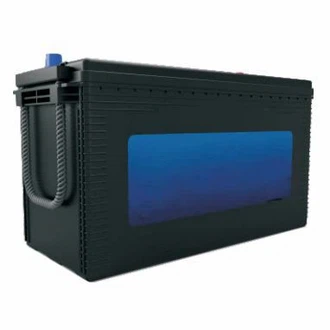


Definition of Car Battery
An automotive battery, or car battery, is a rechargeable battery that is used to start a motor vehicle. Its main purpose is to provide an electric current to the electric-powered starting motor, which in turn starts the chemically-powered internal combustion engine that actually propels the vehicle. Once the engine is running, power for the car's electrical systems is still supplied by the battery, with the alternator charging the battery as demands increase or decrease.
Working Principle of Car Battery
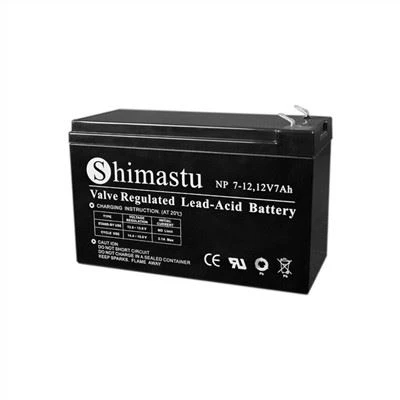

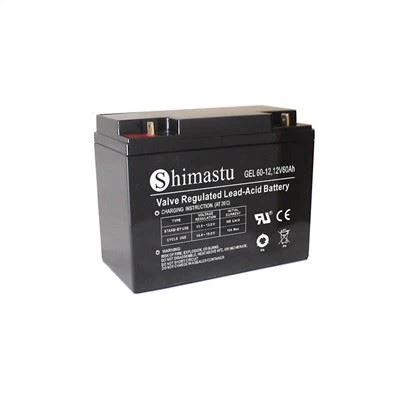

Car batteries deliver three main duties, namely starting the car engine, lighting up the accessories, and ignition of the fuel for consumption. This is why car batteries are often recognized under the category of “SLI” (Starting, Lighting & Ignition) cells. Such types of batteries have the nature of delivering the energy by burst energy provisions whenever required by the various components inside the car. An alternator takes up the powering duties inside the car once the engine has been kicked off by the car battery. Here’s a step by step walkthrough of how a car battery works.
- A car battery comprises of six cells in its shells. An approximate of 12V power is generated by these six cells generating 2 volts per each cell for the car battery to deliver its power. The cell composition of a car battery constitutes 2 rods made up of lead and its oxide that help serve the cause.
- Sulphuric acid serves as the reactive component of a car battery. the cell structure is designed in such a way that the lead and lead oxide rods are dipped inside this acid.
- When triggered, the acid reacts with the lead oxide rod and generates lead sulfate and ions as a by-product of the chemical reaction. The ions produced as a part of this chemical reaction react with the lead plate generating more lead sulfate and hydrogens in the process.
- Both of these chemical reactions lead to the evolution of electrons. These negatively charged particles then loop around the rods to generate power.
- The generated power then flows out of the rods through the terminal endpoints connected to the rods on the exterior of the battery shell case. This energy is then utilized to perform various actions that fall under SLI.
- The entire chemical reaction is reversible in nature. This allows the battery cells to keep on looping the process as a part of the energy generation and consumption process. After a certain amount of time, the battery chemicals wear out suggesting to go in for a regular car battery replacement as a part of the car maintenance process.
The Car’s Power Storage
A car battery is the car’s power bank. The often rectangular, box-shaped battery is the storehouse for the power your vehicle needs to start the motor and maintain a charge. On the outside, a car battery just looks like a boring plastic block with some connectors on the top. But this plastic outer shell is quite durable and usually acid-resistant, to protect the complex inner workings and materials inside that do the magic. The inside of the battery is home to a chemical solution (usually sulfuric acid) and layers of lead and lead dioxide plates, which react with the acid to create energy. There are different voltage levels available for car batteries, the most common being 12 volts.
Energy to Start the Engine
With its power storage, the battery contains enough power to start the engine. The acid and the plate materials (lead and lead dioxide) interact in a specific order to create positive and negative charges as well as byproduct materials. These components create a chemical reaction which generates electrons – or electricity – that travels out of the battery to start your car.Fun fact: if you’ve ever used a car charger to boost your weak car battery, the reason it works is because this sequence of events is reversible. The charger can put the energy back into your battery.Standard 12-volt car batteries have varying degrees of power strength. The CCA (or cold-cranking amperes) rating indicates how well the battery will be able to start an engine in the cold. Depending on the type of battery you have and the climate you live in, you may or may not have the necessary amount of battery power to crank your car’s engine.
Delivers Electricity to the Ignition System
When you turn on your car’s ignition, whether you do it by turning a key or pushing a button, you send a signal to the battery, telling it to initiate that chemical reaction we just talked about in order to produce enough electrical current to get the starter to power up the engine. Basically, the battery’s job in this part of the process is to exude a strong, short burst of power. The coil then generates the high voltage necessary to crank the starter, reach the spark plugs via a distributor, and ignite the fuel inside the combustion chambers.
The Battery Helps Regulate Voltage
It’s a well-known fact that power surges can damage electronics. Well, your battery prevents sudden spikes in power from damaging your car’s internal computer and ignition system from damage. Along with various types of fuse elements and circuit protection devices used throughout the vehicle, a car’s battery can help to regulate the power that goes to the electrical systems.Alternators have voltage regulators that convert the electrical current into a type of current that won’t damage the car’s electronics. The purpose of this regulator is to maintain the highest possible amount of voltage in the circuit consistently. It can signal the alternator to generate more or less power according to the vehicle’s needs. Any excess power charges the battery.Having the battery to rely on as a backup for the alternator is what protects your car’s systems. If you were to suddenly disconnect the alternator from the battery, the resulting voltage surge would likely damage your vehicle. But the completed circuit, with the battery in place, ensures a slower, more regulated change in power levels if your alternator dies and your battery takes over.
Classification of Car Battery

Wet Cell Batteries (SLI)
A conventional starter battery consists of six battery cells. A battery cell, also referred to as a plate block, consists of a positive and a negative set of plates, which in turn consists of several electrodes. A positive electrode consists of active material made from lead oxide and a positive grid made of lead alloy. The grid structure gives the electrodes a solid structure and at the same time serves as an electrical conductor. The active material is immersed in an electrolyte, a mixture of acid and distilled water. A negative electrode also consists of active material, however in this case made of pure lead, and a negative grid. The electrodes with different polarities are separated by a separator. The required battery capacity is achieved by connecting the individual plates in the cell in parallel. Connecting the individual cells in series produces the required voltage of 12 Volt.
EFB Batteries
EFB batteries are an optimized, higher performance version of the wet battery. The abbreviation “EFB” stands for “Enhanced Flooded Battery”. Here too, the plates are insulated from each other with a microporous separator. Between the plate and the separator there is also a polyester scrim. This material helps to stabilize the active material of the plates and extend the life of the battery. EFB batteries have a large number of possible charging cycles and provide more than double the partial and deep discharge performance in comparison with conventional batteries. EFB batteries are often installed in vehicles with simple automatic start-stop systems. Due to their superior performance batteries with EFB technology are also increasingly used as replacements for conventional lead-acid batteries.


AGM batteries are versatile, have high performance and are designed for high demands. In principle, the structure of an AGM battery is the same as that of a wet cell battery. However, in an AGM the electrolyte is no longer free-floating, but rather is bound in a special glass fiber separator – hence the name “Absorbent Glass Mat”. The large contact area contributes to the power output and also makes the battery leak-proof. Due to its construction, the battery is sealed airtight. This feature enables internal recombination of oxygen and hydrogen, so that there is no water loss. To protect against excess pressure, the individual battery cells are equipped with a safety valve, so that they remain safe, even in case of a fault. With regard to their service life, AGM batteries have significant advantages over simple starter batteries. An AGM battery can withstand three times more cycle life than a conventional starter battery. A further advantage of AGM batteries is that they are not dependent on their position, as due to the binding of the electrolyte, no liquid can escape. Even if the battery case is fractured, no battery acid can escape. AGM batteries are ideal for vehicles with automatic start-stop systems with braking energy recovery (recuperation), as a conventional starter battery cannot handle the high power demands of these systems. AGM batteries are also the right choice for cars with high energy consumption and a large number of electrical consumers.
Components of a Typical Car Battery
A typical automobile battery is enclosed in a battery box or case. However, the interior parts of the car battery consist of different components. Below are the essential car battery parts.
Battery Acid
The acid is a solution of sulfuric acid and water (36 to 40 percent). The resulting mixture serves as the electrolyte that triggers the chemical reaction, which produces the electric current that powers the vehicle. It is often of high purity, as the presence of contaminants may alter its effectiveness for car power generation. The acid and water react upon igniting the car, producing the suitable voltage needed to kick-start the vehicle. The voltage produced will be insufficient for driving the car engine if the battery is weak.
Battery Terminal
It is also called battery bushing. The battery terminal is the connection point linking the battery with the car’s electrical components. Like any electrical device, it has two terminals – the positive and negative straps of the battery end cells.
Battery Case
Both fuel and electric vehicles have parts of the batteries enclosed within a box. The case protects the contents and parts of the car battery. For fuel batteries, cast-on-straps are often designed with polypropylene resins. In EVs, the battery enclosure box is usually created with aluminum alloys. The battery case offers protection for its contents and minimizes the impact effects on the battery, thereby extending its life.
Battery Plates
A typical car battery consists of negative and positive plates. Either plate consists of a metal grid, though the positive end contains lead dioxide material, with the negative end having a spongy lead. Either plate has a cast-on strap on top, linking each component to the battery cells.
Battery Separator
As the name indicates, the separator creates a distinction between the positive and negative plates. Also, it is often made of polyethylene or other plastic polymers.
Maintenance Tips for Car Battery
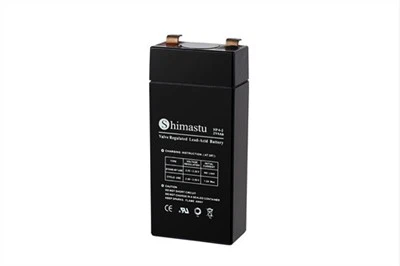

Don't Leave Your Car Unused for Long Periods of Time
If your car is inactive for days at a time (or if it’s only taken on short trips), the battery won’t have sufficient time to recharge. Your car will perform at its best when it’s used regularly, so if possible, take it out for a 30-minute drive at least once a week to warm up the engine and circulate your car’s fluids. If it will be left unused for more than two weeks, it’s likely your car battery will need attention when you next use your car. The best thing to do is ensure it is fully charged, and check that the electrolyte levels are correct (if it has removable caps). If in doubt, contact RAC or an automotive workshop for further advice.
Clean Your Battery Regularly
Grime, dirt or dampness on a car battery can cause leakage across the battery casing, which could cause it to go flat This surface-level grime can be easily removed with a sponge and a dry cloth. Do this at least once a month to avoid build-up. Unfortunately, corrosion on battery terminals and battery lead clamps is common. Corroded terminals and lead clamps can hinder the flow of electricity through the battery, so it’s crucial that grime or build-up is cleared to ensure your battery’s longevity and efficiency. Ask your mechanic to clean the terminals during servicing, if needed.
When Your Car's Engine isn't Running, Don't Use Electronic Accessories
Keeping your headlights, and/or interior lights on, or turning the ignition on to run the infotainment system without starting the engine, can drain the battery. This is because your car’s alternator is shut down when the engine is switched off, so electronic accessories instead drain power from your car’s battery. To avoid this, get into the habit of checking that everything (most importantly, your lights) are switched off every time you exit your car. Also, don’t forget to lock your car when you leave it. This isn’t just for security purposes – your car’s computer system may still be running if you leave your car open, and this could be draining your battery without you even knowing it.
Regularly Test Your Battery Voltage
This one won't extend the life of your battery but it will give you an early warning, so you don't get caught out when it does go flat. Proactively testing your battery could potentially save you from a breakdown or battery failure while out on the road. Qualified mechanics will be able to perform a battery test for you, or you can do a test at home yourself between car services. The simplest way to test your battery’s voltage is by using a voltmeter. Diigital voltmeters are the easiest to use. For the most accurate reading, complete the voltage test at least twelve hours after your car's ignition has been switched off. Start by connecting the positive voltmeter lead to the positive terminal on your battery and repeating with the negative lead. You’ll then receive a voltage reading. A fully charged battery will usually display a reading between 12.4 and 12.8 volts. If your voltage reading falls outside of these numbers, it’s likely your battery requires a professional inspection from a mechanic.
Certifications
Our batteries have been certified with ISO 9001, ISO 14001, UL and CE, etc.


Our Factory
Frequently Asked Questions (FAQ) about Car Battery
Q: Are there any warning signs that may indicate my battery is on the fritz?
Q: How do I determine if my battery is too old?
Q: Why does my battery die?
Q: What are the basic components of a car battery?
Q: What is the liquid inside a car battery?
Q: How long can a car battery last without driving?
Q: How to choose the right car battery?
Read the Owner's Manual of your vehicle minutely to learn about the requisite battery dimensions, CA, CCA ratings and Ampere hour ratings. If you cannot find the Owner's Manual, you can check the details of the existing battery.
Checking the battery dimensions is a must. Although battery boxes and mounts are generalised, checking which size fits your car will be helpful in the long run.
Buy a battery with handles and loops if you plan to maintain your own car.
Do not choose a battery that has a lower Ah rating than the battery present in your car. It majorly affects battery life, and problems may occur while starting your car.
Choose a battery with a high CCA if you live in a place where the temperature falls very low.
Remember that a battery with a too high Ah rating may cause slow charging and load slowly on the alternator.
Choose a battery with a good reserve capacity. This will keep the car and its lamps running for a long time in case the alternator fails.
Make sure you have purchased a new battery within six months of its manufacture.
Store the warranty card in a safe place. You can avail replacement if your car’s battery malfunctions within the warranty period.
Do not forget to check the date of manufacture of a battery. In the absence of a date, check its code.
Q: What is the average lifespan of car battery?
Q: Which type of battery is best for car?
Q: Can I put a higher Ah battery in my car?
Q: How can I extend my car battery life?
Limit short trips. Quick car rides prevent your car's battery from fully charging.
Keep your battery tightly fastened.
Turn off all lights when you get out of the vehicle.
Control the corrosion.
Test your battery often.
Don't use electronics with the engine off.
Q: How long does it take to charge a car battery?
Q: Will driving a car fully recharge a battery?
Q: What should I do if my car battery dies?
A: Take out your jumper cables. It's a good idea to buy a set of jumper cables and keep them in your car. If you don't have jumper cables, you have to find a good Samaritan who not only is willing to assist you but who has jumper cables as well.
Place both vehicles in Park or Neutral and shut off the ignition in both cars.
Engage both parking brakes as well.
Attach one of the red clips to the positive terminal of your battery.
It has "POS" or "+" on it, or it's bigger than the negative terminal.
Attach the other red clip to the positive terminal of the other car.
Attach one of the black clips to the negative terminal on the other battery.
Attach the last black clip to an unpainted metal surface on your car that isn't near the battery.
Use one of the metal struts that holds the bonnet open.
Try to start your vehicle.
Q: Should I turn off my car before replacing the battery?
Q: Can extreme hot or cold temperatures affect my car battery?
Q: Can leaving the lights on drain my car battery?
Q: Can a car battery freeze?
Q: Can a car battery overheat?
Q: Can a car battery cause a fire?
We're professional car battery manufacturers and suppliers in China, specialized in providing high quality custom service. We warmly welcome you to wholesale high-grade car battery made in China here from our factory. For price consultation, contact us.