

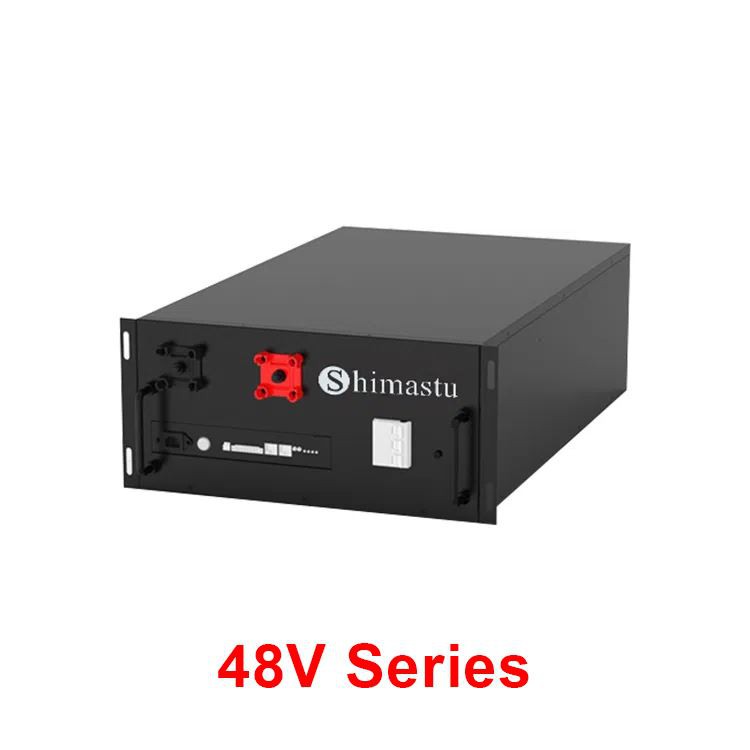
As a trusted 48V Series supplier, I am frequently confronted with the challenge of electromagnetic interference (EMI) in our products. This issue can not only disrupt system performance but also lead to potential safety hazards. In this blog post, I will share some effective strategies to reduce electromagnetic interference in the 48V Series, drawing from my years of experience in the field.
Understanding Electromagnetic Interference in 48V Series
Before delving into the solutions, it's crucial to understand what electromagnetic interference is and how it affects the 48V Series. EMI refers to the disturbance that affects an electrical circuit due to either electromagnetic induction or electromagnetic radiation emitted from an external source. In the context of the 48V Series, EMI can stem from various sources, including power supplies, switching devices, and nearby electrical equipment.
The consequences of EMI in the 48V Series can be severe. It can cause malfunctions in the battery management system (BMS), lead to inaccurate readings of battery status, and even damage sensitive electronic components within the system. Therefore, minimizing EMI is essential for ensuring the reliability and safety of our 48V products.
Shielding: A Key Strategy
One of the most effective ways to reduce electromagnetic interference is through shielding. Shielding involves enclosing the 48V Series components in a conductive material that can absorb and reflect electromagnetic waves. This creates a barrier that prevents EMI from entering or leaving the system.
For our 48V Series, we use high - quality metal enclosures, such as aluminum or steel, which are excellent conductors of electricity. These enclosures are designed to completely surround the battery packs and associated electronics, forming a Faraday cage. A Faraday cage works by redistributing the electric charges on its surface to cancel out the external electric fields, thereby shielding the internal components from EMI.
When implementing shielding, it's important to ensure that the enclosure is properly grounded. Grounding provides a path for the electromagnetic energy to dissipate safely into the earth. Without proper grounding, the shielding may not be as effective, and the EMI can still find its way into the system.
Proper Circuit Board Design
The design of the printed circuit board (PCB) in the 48V Series also plays a significant role in reducing EMI. A well - designed PCB can minimize the generation and propagation of electromagnetic waves.
Firstly, we use a multi - layer PCB design. The additional layers allow for proper separation of power, ground, and signal traces. By keeping the power and ground planes close together, we can reduce the loop area of the current, which in turn reduces the magnetic field generated by the circuit. This is based on Ampere's law, which states that the magnetic field around a current - carrying conductor is proportional to the current and the loop area.
Secondly, we pay attention to the routing of the signal traces on the PCB. We try to keep the traces as short as possible to minimize the radiation and coupling of electromagnetic energy. Additionally, we use proper spacing between the traces to avoid crosstalk, which is a form of EMI caused by the electromagnetic coupling between adjacent traces.

Filtering Components
Another important strategy for reducing EMI in the 48V Series is the use of filtering components. Filters can be used to block or attenuate unwanted electromagnetic frequencies while allowing the desired frequencies to pass through.
We commonly use capacitors and inductors as filtering components. Capacitors can be placed across the power lines to bypass high - frequency noise to the ground. They act as short - circuits for high - frequency signals and open - circuits for low - frequency signals. Inductors, on the other hand, can be used in series with the power lines to block high - frequency current. They present a high impedance to high - frequency signals, thereby reducing the amount of EMI that can pass through the circuit.
In addition to passive filters, we also use active filters in some of our 48V Series products. Active filters incorporate operational amplifiers and other active components to provide more precise and tunable filtering characteristics. They can be designed to target specific frequency ranges of EMI, making them more effective in reducing interference.
Component Selection
The choice of components in the 48V Series can also have a significant impact on EMI. We carefully select components that are designed to generate less electromagnetic noise.
For example, we choose switching power supplies with low - ripple output. Switching power supplies are known to generate EMI due to the high - frequency switching action. By selecting power supplies with low - ripple output, we can reduce the amount of high - frequency noise generated in the system.
Similarly, we opt for semiconductor devices, such as transistors and MOSFETs, with low switching times. Fast - switching devices can generate more electromagnetic noise compared to slower - switching ones. By using components with lower switching times, we can minimize the generation of EMI during the operation of the 48V Series.
Cable Management
Cable management is often overlooked but is an important aspect of reducing EMI in the 48V Series. Cables can act as antennas, picking up and radiating electromagnetic energy.
We use shielded cables in our products to reduce the radiation and reception of EMI. Shielded cables have a conductive outer layer that can absorb and divert electromagnetic waves. The shield is usually grounded to provide a path for the EMI to dissipate.
In addition to using shielded cables, we also pay attention to the routing of the cables. We try to keep the power cables and signal cables separate to avoid coupling between them. We also use cable clamps and strain reliefs to ensure that the cables are properly secured and do not form loops, which can act as antennas and increase EMI.
Testing and Validation
Once we have implemented the strategies for reducing EMI in the 48V Series, it's important to test and validate the effectiveness of these measures. We use specialized equipment, such as spectrum analyzers and EMI test chambers, to measure the electromagnetic emissions of our products.
The spectrum analyzer allows us to analyze the frequency spectrum of the electromagnetic emissions from the 48V Series. By identifying the frequencies at which the emissions are highest, we can further optimize our EMI reduction strategies.
The EMI test chamber provides a controlled environment for measuring the electromagnetic emissions of the products. It eliminates external interference and allows us to accurately measure the emissions of the 48V Series under different operating conditions.
Based on the test results, we can make adjustments to our shielding, filtering, and other EMI reduction techniques to ensure that our products meet the relevant electromagnetic compatibility (EMC) standards.
Conclusion
Reducing electromagnetic interference in the 48V Series is a complex but achievable task. By implementing a combination of shielding, proper circuit board design, filtering components, component selection, cable management, and testing and validation, we can effectively minimize EMI and ensure the reliability and safety of our products.
We offer a wide range of 48V Lithium Battery and 48V Lithium Battery products that have been designed with these EMI reduction strategies in mind. If you are interested in learning more about our 48V Series or have any specific requirements for your project, we encourage you to contact us for procurement and further discussion. We are committed to providing you with high - quality products that meet your needs and comply with the strictest EMC standards.
References
- Paul, Clayton R. "Introduction to Electromagnetic Compatibility." Wiley-IEEE Press, 2006.
- Ott, Henry W. "Electromagnetic Compatibility Engineering." Wiley-Interscience, 2009.


