

As a supplier of the 48V Series, I often receive inquiries from customers regarding the possibility of using our 48V Series batteries in series with other voltage series. This is a crucial question that requires a comprehensive understanding of battery technology and electrical principles. In this blog post, I will delve into the technical aspects of series - connecting different voltage series, the potential benefits and risks, and provide practical guidance based on my experience in the industry.
Understanding Battery Series Connection
Before we discuss whether the 48V Series can be used in series with other voltage series, it's essential to understand the concept of series connection. When batteries are connected in series, the positive terminal of one battery is connected to the negative terminal of the next battery. The total voltage of a series - connected battery pack is the sum of the individual battery voltages. For example, if you connect two 12V batteries in series, the resulting battery pack will have a voltage of 24V.
Mathematically, if we have (n) batteries with voltages (V_1, V_2,\cdots, V_n) connected in series, the total voltage (V_{total}) is given by the formula (V_{total}=V_1 + V_2+\cdots+V_n).
Technical Feasibility of Connecting 48V Series with Other Voltage Series
From a technical perspective, it is possible to connect the 48V Series with other voltage series. However, several factors need to be considered to ensure a safe and efficient operation.
Compatibility of Battery Chemistry
Batteries with different chemistries have different charge and discharge characteristics. For instance, lead - acid batteries and lithium - ion batteries have distinct voltage profiles, charging requirements, and self - discharge rates. Connecting a 48V lithium - ion battery from our 48V Lithium Battery series with a lead - acid battery of a different voltage may lead to uneven charging and discharging, which can damage the batteries and reduce their lifespan. It is generally recommended to use batteries of the same chemistry when connecting them in series.
Capacity Matching
In addition to chemistry, the capacity of the batteries also plays a vital role. When batteries are connected in series, they should ideally have the same capacity. If a 48V battery with a high capacity is connected in series with a lower - capacity battery of a different voltage, the lower - capacity battery may reach its full charge or discharge state earlier than the 48V battery. This can cause overcharging or over - discharging of the lower - capacity battery, which is extremely dangerous and can lead to battery failure or even safety hazards.
Voltage and Current Ratings
The voltage and current ratings of the batteries and the connected electrical system must be carefully considered. The total voltage of the series - connected battery pack should be within the acceptable range of the electrical equipment it powers. Moreover, the current - handling capabilities of the batteries should be sufficient to meet the load requirements. Overloading the batteries can cause overheating, which may damage the batteries and pose a fire risk.
Benefits of Connecting 48V Series with Other Voltage Series
Despite the challenges, there are some potential benefits to connecting the 48V Series with other voltage series.
Customizing Voltage Output
One of the main advantages is the ability to customize the voltage output to meet specific application requirements. For example, if an electrical device requires a 60V power supply, you can connect a 48V battery from our 48V Lithium Battery series with a 12V battery in series to achieve the desired voltage.
Utilizing Existing Batteries
Connecting the 48V Series with other voltage series can also be a cost - effective solution if you already have some batteries of different voltages on hand. Instead of purchasing a new battery pack with the exact required voltage, you can combine the existing batteries to meet your needs.
Risks and Precautions
While there are benefits, there are also significant risks associated with connecting the 48V Series with other voltage series.
Imbalanced Charging and Discharging
As mentioned earlier, imbalanced charging and discharging can occur when batteries with different characteristics are connected in series. This can lead to reduced battery life, decreased performance, and safety issues. To mitigate this risk, it is recommended to use a battery management system (BMS) that can monitor and balance the charge of each battery in the series.
Safety Hazards
Overcharging, over - discharging, and overheating are serious safety hazards that can result from improper series connection. These issues can cause battery swelling, leakage, and even explosion. Therefore, it is crucial to follow all safety guidelines and use appropriate protective equipment when working with batteries.
Practical Guidance for Series Connecting 48V Series with Other Voltage Series
If you decide to connect our 48V Series with other voltage series, here are some practical steps to follow:
- Choose Compatible Batteries: Select batteries of the same chemistry and similar capacities. This will help ensure balanced charging and discharging.
- Use a Battery Management System: A BMS can monitor the voltage, current, and temperature of each battery in the series and prevent overcharging and over - discharging.
- Check the Electrical System: Make sure that the total voltage and current of the series - connected battery pack are within the acceptable range of the electrical equipment it powers.
- Perform Regular Inspections: Regularly inspect the batteries for signs of damage, such as swelling, leakage, or overheating. Replace any damaged batteries immediately.
Conclusion
In conclusion, it is technically possible to connect our 48V Series with other voltage series, but it requires careful consideration of battery chemistry, capacity, voltage, and current ratings. While there are potential benefits, such as customizing voltage output and utilizing existing batteries, there are also significant risks, including imbalanced charging and discharging and safety hazards.
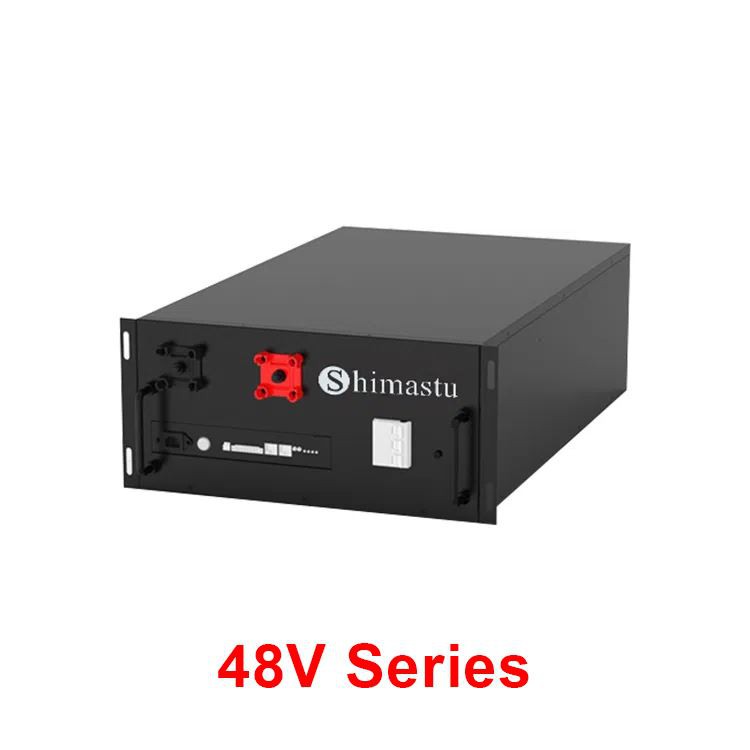

If you have any questions or need further assistance regarding the series connection of our 48V Series with other voltage series, please feel free to contact us for a detailed discussion. Our team of experts is always ready to provide you with professional advice and solutions tailored to your specific needs. Whether you are looking for a small - scale battery solution or a large - scale energy storage system, we have the products and expertise to meet your requirements.
References
- Linden, D., & Reddy, T. B. (Eds.). (2002). Handbook of Batteries. McGraw - Hill.
- Marschewski, M. (2019). Battery Systems Engineering. Springer International Publishing.


