

Hey there! So, I'm running a business where we supply the OPZV Series batteries. A question that often pops up from our customers, new and old alike, is “What is the maximum discharge current for the OPZV Series?” It's a super important question, especially if you're planning to use these batteries for heavy - duty applications. So, I'm gonna break it down for you right here.
First off, let's get a bit of background on the OPZV Series. These are Valve Regulated Tubular Plate GEL Batteries. They're known for their long service life, high reliability, and excellent performance, which makes them great for things like solar energy storage systems, UPS (uninterruptible power supply) systems, and some industrial applications.
Now, the maximum discharge current for the OPZV Series batteries isn't a one - size - fits - all answer. It depends on a few different factors. One of the main things is the battery's capacity. Usually, the larger the capacity of the battery, the higher the maximum discharge current it can handle.
Let's say we've got a lower - capacity OPZV battery, like a 100Ah one. Based on our experience in the market and the technical specs we get from the manufacturers, such a battery might have a maximum discharge current of around 200A for a short - term period. That short - term is usually considered about 10 to 30 seconds. This high current can be really useful in cases where you need a sudden burst of power, like when starting up a motor in an industrial machine or dealing with a sudden spike in demand in a UPS system.
However, if you need to discharge the battery continuously, the maximum current drops significantly. For the same 100Ah OPZV battery, a continuous discharge current might be around 20A to 30A. This is because continuous high - current discharge can generate a lot of heat inside the battery, which can damage the battery plates and the gel electrolyte over time.
On the other hand, if we look at a higher - capacity OPZV battery, say a 500Ah one, the numbers change. For a short - term discharge, it can handle a much higher current, maybe up to 1000A. And for continuous discharge, it can manage around 100A. The reason for this difference is that the larger battery has more active material in its plates and a larger volume of electrolyte, which allows it to handle more current without overheating as quickly.
Another factor that affects the maximum discharge current is the temperature. Batteries are sensitive to temperature, and the OPZV series is no exception. In colder temperatures, the battery's internal resistance increases. This means that it becomes more difficult for the battery to deliver high currents. So, if you're using the OPZV batteries in a cold environment, you'll need to reduce the maximum discharge current to avoid damaging the battery.
For example, if the normal maximum short - term discharge current for a particular OPZV battery is 200A at 25°C (room temperature), in a cold environment of 0°C, you might need to reduce it to around 150A. And in extremely cold temperatures, say - 20°C, the maximum current could drop to as low as 100A.
On the flip side, in hot temperatures, the battery can actually deliver a slightly higher current in the short - term. But continuous high - temperature and high - current operation is not recommended. It can cause the electrolyte to dry out faster and accelerate the degradation of the battery plates, shortening the battery's overall lifespan.
The state of charge (SOC) of the battery also plays a role. When the battery is fully charged, it can usually handle a higher discharge current compared to when it's nearly empty. As the SOC decreases, the battery's ability to provide high currents reduces. This is because as the battery discharges, the chemical reactions inside slow down, and the available active material on the plates is used up.
Let's talk about how this all relates to real - world applications. If you're using OPZV batteries in a solar energy storage system, understanding the maximum discharge current is crucial. During the night or on cloudy days, when the solar panels aren't producing power, the batteries need to supply electricity to your home or business. If you have a high - power device, like an air conditioner or an industrial heater, you need to make sure that the battery can handle the current draw of that device.
In a UPS system, the maximum discharge current is also vital. When there's a power outage, the UPS needs to switch to battery power immediately and supply power to all the connected devices. Some devices, such as servers or large - screen monitors, can have a high inrush current when they start up. The OPZV batteries need to be able to deliver this high current for a short period to ensure a smooth transition and keep the devices running.
As a supplier of the OPZV Series batteries, we always make sure to provide our customers with detailed information about the maximum discharge current based on their specific needs. We take into account the application, the expected load, the environment where the batteries will be used, and the state of charge.
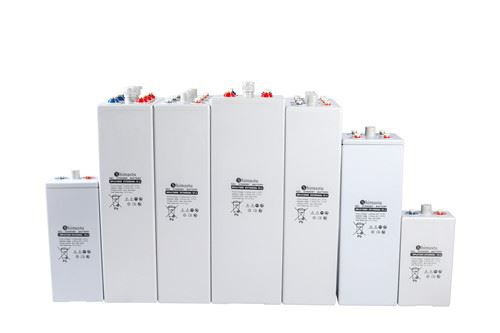

If you're thinking about using OPZV batteries for your project, or if you already have them and you're having questions about the discharge current, don't hesitate to reach out. We're here to help you make the most out of these high - quality batteries. Whether you're a small - scale solar user or an industrial client, we've got the expertise to guide you through the whole process. You can drop us a message to discuss your requirements further. We'll work together to figure out the best battery solution for your needs and make sure you understand all the technical aspects, including the maximum discharge current.
References
- Industry reports on OPZV battery technology
- Manufacturer's technical specifications for OPZV Series batteries


