

Hey there! As a supplier of the OPZV Series, I often get asked about the self - discharge rate of these batteries. So, I thought I'd take the time to break it down for you in this blog post.

First off, let's talk about what self - discharge actually means. Self - discharge is the process where a battery loses its charge over time even when it's not connected to any load. It's like your phone battery slowly losing power when it's just sitting on your nightstand. For batteries, this is an important factor because it affects how long they can store energy and be ready for use when you need them.
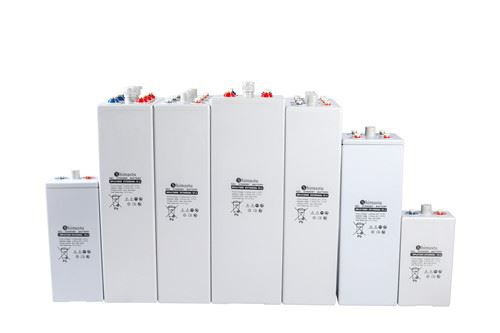
The OPZV Series, also known as Valve Regulated Tubular Plate GEL Batteries, has some unique features that influence its self - discharge rate. These batteries use tubular plate technology and gel electrolyte, which gives them an edge in terms of performance and longevity.
The self - discharge rate of the OPZV Series is relatively low compared to many other types of batteries. Under normal storage conditions (around 20 - 25°C or 68 - 77°F), the self - discharge rate is typically less than 3% per month. That means if you fully charge an OPZV battery and then store it, after one month, it will still have over 97% of its initial charge. This is a huge advantage, especially for applications where the battery might be stored for a while before being used.
Let's look at why the OPZV Series has such a low self - discharge rate. The tubular plate design is a key factor. The positive plates in these batteries are made up of tubes filled with active material. This design not only provides better protection for the active material but also reduces the internal resistance of the battery. A lower internal resistance means less energy is wasted as heat, and thus, less self - discharge occurs.
The gel electrolyte also plays a crucial role. Gel batteries have a semi - solid electrolyte that is immobilized. This reduces the movement of ions within the battery, which in turn minimizes self - discharge. Unlike liquid electrolyte batteries, where the electrolyte can move around and cause short - circuits or self - discharge paths, the gel in OPZV batteries keeps everything in place.
However, it's important to note that the self - discharge rate can be affected by several factors. Temperature is one of the biggest influencers. As the temperature rises, the self - discharge rate of the OPZV Series will increase. For every 10°C (18°F) increase in temperature above 25°C (77°F), the self - discharge rate can roughly double. So, if you store the batteries in a hot environment, say at 35°C (95°F), the self - discharge rate could be around 6% per month instead of the normal less than 3%.
Another factor is the state of charge. A fully charged battery will have a slightly higher self - discharge rate than a partially charged one. This is because the higher the state of charge, the more active the chemical reactions inside the battery, which can lead to more self - discharge.
So, what does this low self - discharge rate mean for you? Well, if you're using the OPZV Series in a solar energy storage system, it means you can charge the batteries during the sunny days and store the energy for later use. Even if there are a few cloudy days or if you don't use the stored energy immediately, the batteries will still hold their charge well.
For backup power applications, like in a telecommunications tower or a small business, the low self - discharge rate ensures that the batteries are always ready to kick in when there's a power outage. You don't have to worry about constantly recharging the batteries just to keep them in a usable state.
If you're in the market for reliable batteries with a low self - discharge rate, the OPZV Series is definitely worth considering. Our company has been supplying these high - quality batteries for years, and we've seen firsthand how they perform in various applications.
We understand that every customer's needs are different. Whether you need a small battery for a home solar setup or a large - scale battery bank for an industrial application, we can provide you with the right OPZV battery solution. Our team of experts is always on hand to answer any questions you might have and help you choose the best battery for your specific requirements.
If you're interested in learning more about the OPZV Series or are thinking about making a purchase, don't hesitate to reach out. We're here to help you with all your battery needs. Whether it's discussing the self - discharge rate in more detail or getting a quote for your project, we're just a message away. Let's start a conversation and see how the OPZV Series can work for you.
References
- Battery Technology Handbook
- Industry reports on Valve Regulated Tubular Plate GEL Batteries


