

As a trusted supplier of 200 Amp GEL batteries, I often receive inquiries about the power density of these energy - storage solutions. Power density is a crucial parameter that helps users understand how much power a battery can deliver relative to its size or mass. In this blog, we'll delve into the concept of power density, explore what it means for a 200 Amp GEL battery, and why it matters in various applications.

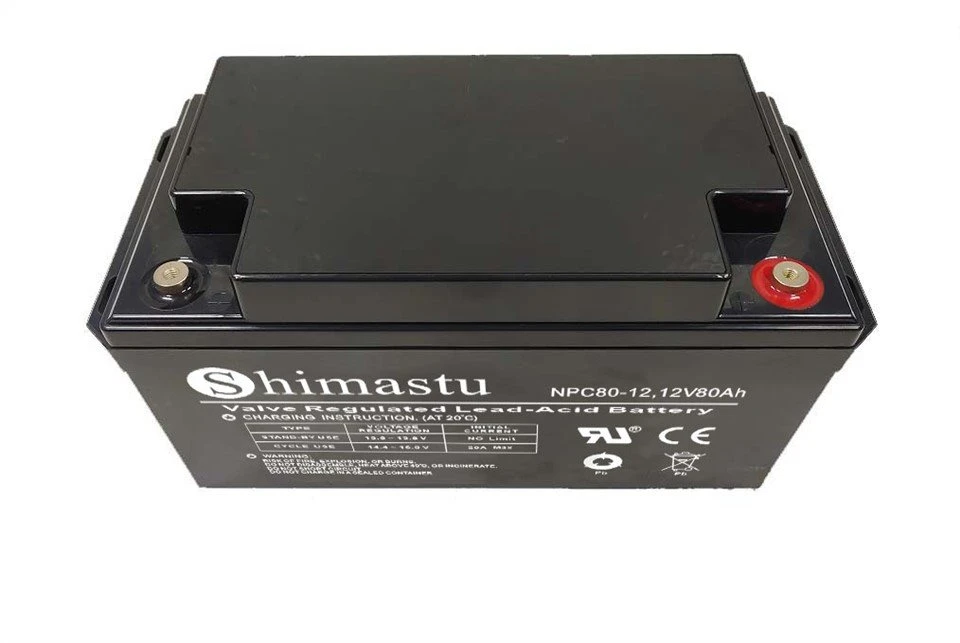
Understanding Power Density
Power density is defined as the amount of power (measured in watts, W) that can be produced per unit volume (volumetric power density, W/m³) or per unit mass (gravimetric power density, W/kg). In simple terms, it gives us an idea of how efficiently a battery can store and release energy. A high - power - density battery can deliver a large amount of power in a relatively small and light package, which is highly desirable in many modern applications where space and weight are at a premium.
For a battery, power (P) is calculated using the formula (P = VI), where (V) is the voltage and (I) is the current. In the case of a 200 Amp GEL battery, the current rating is 200 Amperes. However, to calculate the power density, we also need to know the voltage of the battery and its volume or mass.
Voltage and Power of a 200 Amp GEL Battery
GEL batteries are typically available in standard voltages such as 12V, 24V, etc. Let's assume we're dealing with a 12V 200 Amp GEL battery. Using the power formula (P = VI), we can calculate the power output of this battery as (P=12V\times200A = 2400W).
Volumetric and Gravimetric Power Density
To calculate the volumetric power density, we need to know the volume of the 200 Amp GEL battery. The volume can vary depending on the specific design and construction of the battery. Let's say, for example, that the volume of our 12V 200 Amp GEL battery is (0.01m^{3}). The volumetric power density ((P_{v})) would then be calculated as (P_{v}=\frac{P}{V_{battery}}=\frac{2400W}{0.01m^{3}} = 240000W/m^{3})
For the gravimetric power density, we need to know the mass of the battery. Suppose the mass of the 12V 200 Amp GEL battery is 25 kg. The gravimetric power density ((P_{g})) would be (P_{g}=\frac{P}{m}=\frac{2400W}{25kg}=96W/kg)
Why Power Density Matters
The power density of a 200 Amp GEL battery has significant implications for its applications.
Portable and Mobile Applications
In portable devices or mobile applications such as electric vehicles, boats, or portable power stations, a high - power - density battery is essential. A battery with high power density can provide the necessary power while taking up less space and adding less weight to the vehicle or device. This allows for greater mobility and longer operating times without the need for frequent recharging.
Backup Power Systems
For backup power systems like UPS Power Supply Battery, power density is also crucial. In a data center or a critical facility, space is often limited, and the backup power system needs to be able to deliver a large amount of power quickly in case of a power outage. A high - power - density 200 Amp GEL battery can meet these requirements, ensuring that the critical equipment remains operational until the main power is restored.
Comparing with Other Battery Types
When compared to other battery types, GEL batteries generally have a moderate power density. For example, lithium - ion batteries typically have a higher power density than GEL batteries. However, GEL batteries have their own advantages, such as better tolerance to over - charging and discharging, longer cycle life under certain conditions, and lower cost in some cases.
Applications of 200 Amp GEL Batteries
200 Amp GEL batteries are used in a wide range of applications due to their relatively high power output and reliability.
Renewable Energy Systems
In solar and wind energy systems, 200 Amp GEL batteries are used to store the energy generated during the day or when the wind is blowing. These batteries can then supply power to the electrical grid or to off - grid homes and buildings during periods of low energy production. The power density of these batteries affects how much energy can be stored and delivered in a given space, which is important for the overall efficiency of the renewable energy system.
Marine Applications
On boats, 200 Amp GEL batteries are used to power various electrical systems, including navigation equipment, lighting, and pumps. The high current rating of these batteries allows them to provide the necessary power for these systems, while their ability to withstand deep discharges makes them suitable for marine environments.
Our Product Range
As a supplier of 200 Amp GEL batteries, we also offer a variety of other high - quality battery products. Our 12V 80Ah Deep Cycle Battery is designed for applications that require a long - lasting and reliable power source. It has a deep - cycle design, which means it can be discharged and recharged multiple times without significant loss of capacity.
We also have the 12V 250Ah GEL Battery, which offers even higher capacity for applications that demand more energy storage. These batteries are built with high - quality materials and advanced manufacturing processes to ensure optimal performance and durability.
Conclusion
In conclusion, the power density of a 200 Amp GEL battery is an important parameter that affects its performance and suitability for various applications. By understanding the power density, users can make more informed decisions when choosing a battery for their specific needs.
If you're interested in learning more about our 200 Amp GEL batteries or any of our other products, we encourage you to contact us for a detailed discussion. Our team of experts is ready to assist you in finding the right battery solution for your application. Whether you're in the market for a backup power system, a renewable energy storage solution, or a marine battery, we have the products and knowledge to meet your requirements. Let's start a conversation about your battery needs today!
References
- Linden, D., & Reddy, T. B. (2002). Handbook of Batteries. McGraw - Hill.
- Burrows, L. (2010). Battery Technology Handbook. Butterworth - Heinemann.


