

Hey there! As a supplier of 12V24Ah GEL batteries, I've seen a lot of questions about how these batteries age. So, I thought I'd take a deep dive into the aging mechanism of a 12V24Ah GEL battery and share what I've learned.
First off, let's understand what a 12V24Ah GEL battery is. The "12V" refers to the battery's voltage, which is the electrical potential difference that allows it to power devices. The "24Ah" stands for ampere - hours, which is a measure of the battery's capacity. In simple terms, a 12V24Ah GEL battery can supply 24 amps of current for 1 hour at 12 volts.
Now, let's get into the aging mechanism. There are several factors that contribute to the aging of a 12V24Ah GEL battery, and I'll break them down one by one.
Sulfation
One of the most common causes of battery aging is sulfation. When a lead - acid battery (like our 12V24Ah GEL battery) discharges, lead sulfate forms on the battery plates. During charging, this lead sulfate should convert back to lead and lead dioxide. However, if the battery is left in a discharged state for too long or is not charged properly, the lead sulfate can crystallize. These crystals are hard and difficult to break down, and they reduce the surface area of the battery plates available for chemical reactions. As a result, the battery's capacity decreases, and it becomes less efficient at storing and releasing energy.
To prevent sulfation, it's important to keep the battery charged. If you're not using the battery for an extended period, you should put it on a float charger. This type of charger maintains a low, constant voltage to keep the battery fully charged without overcharging it.
Grid Corrosion
Another factor that affects battery aging is grid corrosion. The grids in a lead - acid battery are made of lead alloy, and they support the active material on the battery plates. Over time, the grids can corrode due to the acidic electrolyte in the battery. This corrosion can weaken the grids, causing them to break or lose their connection to the active material. When this happens, the battery's performance declines, and its capacity drops.
Grid corrosion is more likely to occur in batteries that are exposed to high temperatures or are frequently overcharged. To minimize grid corrosion, it's important to keep the battery operating within its recommended temperature range and to use a proper charging system.
Water Loss
In a lead - acid battery, water is an important part of the electrolyte. During charging, some of the water in the electrolyte can be broken down into hydrogen and oxygen gases through a process called electrolysis. In a GEL battery, the electrolyte is in a gel form, which reduces the rate of water loss compared to a flooded lead - acid battery. However, water loss can still occur, especially if the battery is overcharged or exposed to high temperatures.
When water is lost from the electrolyte, the concentration of sulfuric acid increases, which can accelerate sulfation and grid corrosion. To prevent water loss, it's important to use a charger with a proper charging algorithm that limits overcharging.
Internal Short - Circuits
Internal short - circuits can also contribute to battery aging. These short - circuits can occur when the separator between the positive and negative plates in the battery is damaged. This can happen due to physical damage to the battery, such as dropping or crushing it, or due to the growth of lead dendrites. Lead dendrites are tiny, needle - like structures that can grow from the battery plates and penetrate the separator, creating a short - circuit.
When an internal short - circuit occurs, the battery can lose its capacity quickly, and it may even overheat or catch fire in extreme cases. To prevent internal short - circuits, it's important to handle the battery carefully and to ensure that it is stored and used in a proper environment.
Thermal Runaway
Thermal runaway is a serious problem that can cause rapid aging and even failure of a 12V24Ah GEL battery. It occurs when the heat generated during charging exceeds the heat dissipated by the battery. This can happen if the battery is charged at a high rate, if the ambient temperature is too high, or if there is a problem with the charging system.
As the temperature of the battery increases, the rate of chemical reactions inside the battery also increases. This leads to more heat generation, which further increases the temperature. This positive feedback loop can quickly lead to thermal runaway, causing the battery to overheat, swell, and eventually fail. To prevent thermal runaway, it's important to use a charger with temperature compensation and to keep the battery in a well - ventilated area.
Now, you might be wondering how all these aging factors affect the performance of a 12V24Ah GEL battery. As the battery ages, its capacity decreases, which means it can store less energy. This results in a shorter runtime for the devices powered by the battery. The battery's internal resistance also increases, which means it can't deliver current as efficiently. This can cause voltage drops and reduced power output.
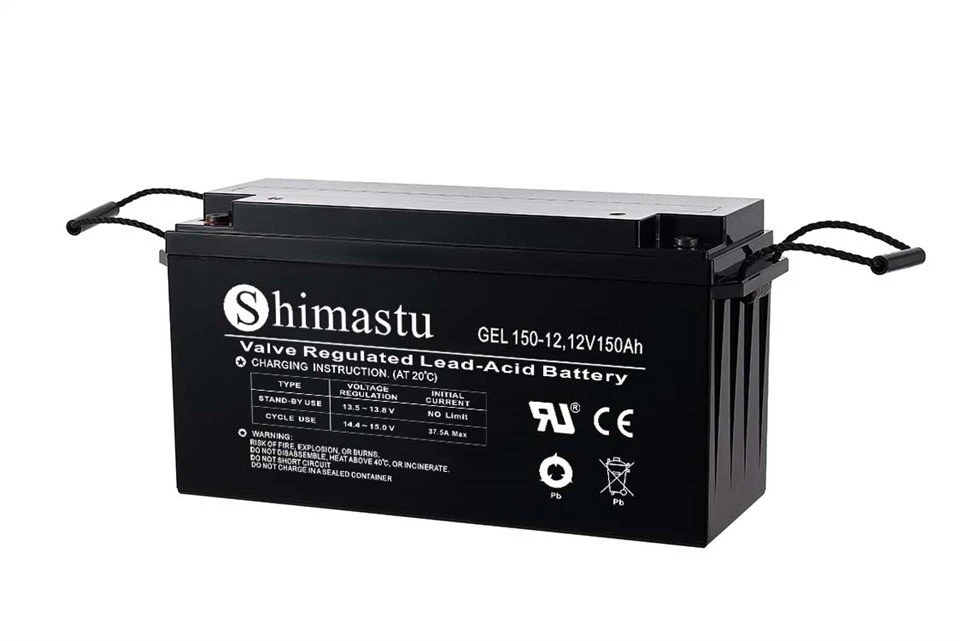
If you're in the market for a reliable battery, we also offer other great options like the 12V 150AH Gel Battery, Valve Regulated Lead Acid Battery 12V 7AH, and 12V100Ah GEL Battery. These batteries are designed to provide long - lasting performance and are suitable for a wide range of applications.
If you're interested in learning more about our 12V24Ah GEL batteries or any of our other products, or if you have any questions about battery aging and how to extend battery life, don't hesitate to reach out. We're here to help you make the best choice for your power needs. Contact us today to start a discussion about your procurement requirements.

References
- Linden, D., & Reddy, T. B. (2002). Handbook of Batteries. McGraw - Hill.
- Berndt, D. (2000). Lead - Acid Batteries: Science and Technology. Springer.


