

Hey there! As a supplier of the OPZV Series batteries, I often get asked about how to detect the state of health (SOH) of these power - packed energy storage units. So, I thought I'd put together this blog post to share some insights on this important topic.
First off, let's understand why detecting the SOH of OPZV Series batteries is a big deal. These Valve Regulated Tubular Plate GEL Batteries are widely used in various applications, from solar power systems to backup power supplies. Knowing their SOH helps you plan maintenance, avoid unexpected failures, and ensure optimal performance over the long run.
Visual Inspection
One of the simplest and most straightforward ways to start assessing the SOH of OPZV Series batteries is through a visual inspection. You don't need any fancy equipment for this. Just take a good look at the battery casing. Check for signs of physical damage such as cracks, bulges, or leaks. Cracks can allow moisture and contaminants to enter the battery, which can lead to internal short - circuits and reduced performance. Bulges, on the other hand, might be a sign of overcharging or overheating, both of which can negatively impact the battery's SOH.
Inspect the battery terminals as well. Corrosion on the terminals can increase the resistance in the circuit, resulting in voltage drops and inefficient charging and discharging. If you notice any corrosion, it can usually be cleaned off using a mixture of baking soda and water. But keep in mind, excessive or recurrent corrosion could indicate underlying issues with the battery.
Measuring Voltage
Voltage measurement is a common and relatively easy method to gauge the SOH of a battery. You'll need a multimeter for this. First, make sure the battery has been at rest for a while (usually a few hours) to allow the surface charge to dissipate. This will give you a more accurate reading.
For a fully charged OPZV battery, the voltage should be around 2.35 - 2.4 volts per cell. As the battery discharges, the voltage will drop. If the measured voltage is significantly lower than the expected value for a fully charged battery in good condition, it could be a sign of a weak or damaged battery. However, it's important to note that voltage alone is not the most precise indicator of SOH. A battery can have a normal voltage but still have reduced capacity.
Conducting a Load Test
A load test is a more comprehensive way to evaluate the SOH of OPZV Series batteries. It involves applying a known load to the battery and measuring how it responds. You'll need a load tester, which can vary in complexity depending on your requirements.
During the load test, the battery is discharged at a specific rate while the voltage and current are monitored. A healthy battery should be able to maintain a relatively stable voltage under load. If the voltage drops rapidly during the load test, it indicates that the battery has a reduced capacity and may be approaching the end of its useful life.

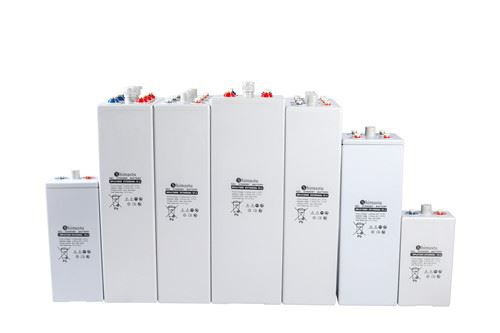
It's important to follow the manufacturer's guidelines when conducting a load test. Different OPZV batteries may have different recommended load currents and test durations.
Analyzing Internal Resistance
The internal resistance of a battery is another important parameter for assessing its SOH. As a battery ages and its components deteriorate, the internal resistance tends to increase. Measuring the internal resistance can provide valuable insights into the battery's condition.
There are specialized internal resistance meters available for this purpose. These meters work by applying a small current pulse to the battery and measuring the resulting voltage drop. By comparing the measured internal resistance with the manufacturer's specifications, you can determine if the battery is in good health.
A significant increase in internal resistance can indicate issues such as sulfation (the formation of lead sulfate crystals on the battery plates), electrolyte dry - out, or plate degradation. These problems can reduce the battery's capacity and performance.
Monitoring Battery Capacity
Battery capacity is perhaps the most direct measure of the SOH. The capacity of an OPZV battery is typically rated in ampere - hours (Ah). To determine the actual capacity of a battery, you'll need to perform a full discharge test.
This involves connecting a load to the battery and discharging it until it reaches a predefined end - of - discharge voltage. The current during the discharge is measured continuously, and the capacity is calculated by integrating the current over time.
For example, if a battery is discharged at a constant current of 10 amps for 10 hours until it reaches the end - of - discharge voltage, its capacity is 100 Ah. If the measured capacity is significantly lower than the rated capacity, it means the battery's SOH is poor.
Using Battery Management Systems (BMS)
In modern setups, Battery Management Systems (BMS) are becoming increasingly popular for monitoring the SOH of OPZV Series batteries. A BMS is an intelligent system that can continuously monitor various parameters such as voltage, current, temperature, and internal resistance.
It can provide real - time data on the battery's state of charge (SOC) and SOH. Some advanced BMSs can even predict the remaining useful life of the battery based on historical data and algorithms.
By using a BMS, you can proactively manage your battery system, detect potential issues early, and take appropriate actions to extend the battery's lifespan.
Temperature Monitoring
Temperature plays a crucial role in the performance and SOH of OPZV Series batteries. High temperatures can accelerate the chemical reactions inside the battery, leading to faster degradation. On the other hand, low temperatures can reduce the battery's capacity and increase its internal resistance.
Monitoring the battery temperature regularly can help you identify abnormal operating conditions. You can use temperature sensors to measure the temperature of the battery cells. If the temperature is consistently outside the recommended operating range, it's a sign that something might be wrong.
For example, if the battery is overheating during charging or discharging, it could indicate a problem with the charging system or a short - circuit inside the battery.
Regular Maintenance and Record - Keeping
Regular maintenance is essential for ensuring the good SOH of OPZV Series batteries. This includes cleaning the battery casing, checking the electrolyte level (if applicable), and making sure the connections are tight.
Keeping detailed records of battery performance, including voltage measurements, load test results, and temperature readings, can also be very helpful. By analyzing these records over time, you can track the battery's SOH trends and identify any potential issues before they become major problems.
Contact for Purchase and Consultation
If you're in the market for high - quality OPZV Series batteries or need more in - depth advice on battery health detection, don't hesitate to reach out. Our team of experts is always ready to help you make the right choices for your energy storage needs. Whether you're setting up a new solar power system or looking to replace old batteries in your backup power supply, we've got you covered.
References
- Battery Technology Handbook.
- Manufacturer's documentation for OPZV Series batteries.


